


Power BI: dashboard stops to work after the column name has been changed
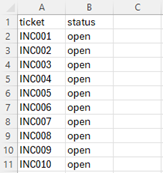
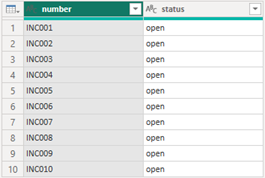
When the column name of my data source has changed, my dashboard will stop to work and to resolve it, I will have to update it manually. In this article, I will explain different ways to do it automatically and I will have to do it in Power BI Query. I have this data source:
| excel | Power BI |
 |
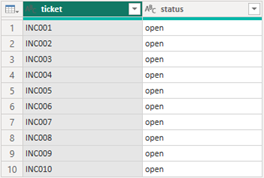 |
If in excel, I change the name of the column A from “ticket” to “number”, I will get an error after the refresh:

Based on the configuration of my data source, I may be able to use option 1, if not, option 2.
Option 1: without coding
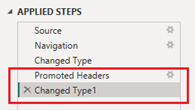
On the right side, in “applied steps”, I will delete the 2 last steps:
 |
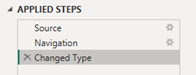 |
If the result doesn’t look like that, go to option 2:
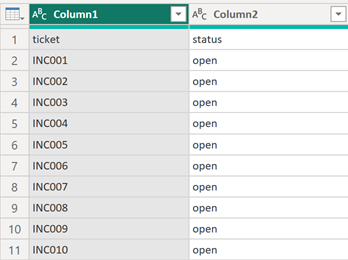
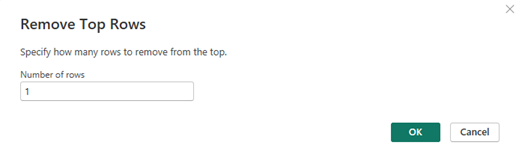
Click on “home -> remove rows -> remove top rows” then put 1 because I want to delete only the first row:

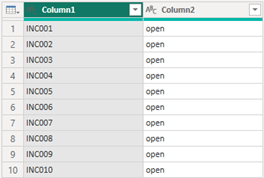
Double click on the header to change the name:
 |
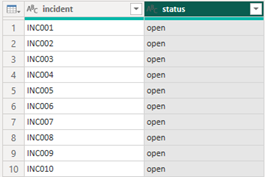 |
So in the excel, I can put whatever I want, in Power BI, it will always be “incident”. The negative part for this option is that when I add a new column in excel, in Power BI, I will have to change the name manually if not, it will appear as “column 3”.
Option 2: with coding
I will have to modify the code by implementing: Table.ColumnNames(xxx){0}
NOTE:
- Change xxx by the previous step name
- 0 means column A so 1 = column B, etc.
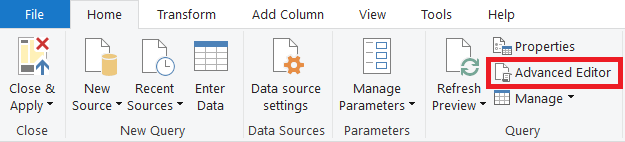
Click on “home -> advanced editor”:
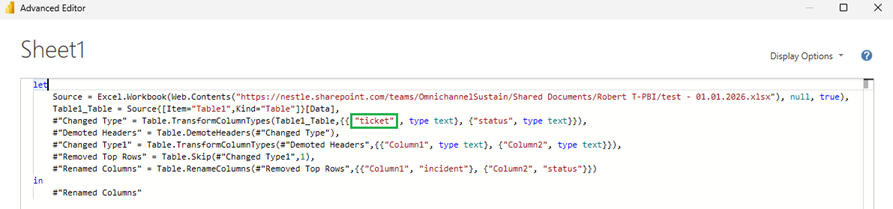
Change the green part by the code above:


NOTE: do that for every column that the name can be changed
So in the excel, the name that I will put, it will be reflected to Power BI and I don’t have the negative part of the unique name.
If I want to have an unique name, meaning that putting whatever I want in excel, in Power BI, it will always be “incident” for instance
Click on “home -> use first row as headers -> use headers as first row”:

Click on “home -> remove rows -> remove top rows” then put 1 because I want to delete only the first row:
Double click on the header to change the name:
|
|
Click on “home -> advanced editor”:
Change the green part by the code above:
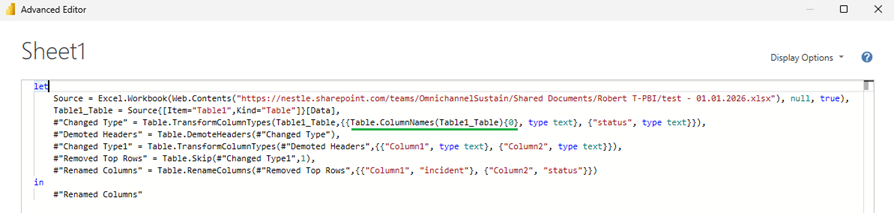
NOTE: do that for every column that the name can be changed
The negative part for this unique name is that when I add a new column in excel, in Power BI, I will have to change the name manually if not, it will appear as “column 3”.
Interesting Topics
-

Be successfully certified ITIL 4 Managing Professional
Study, study and study, I couldn’t be successfully certified without studying it, if you are interested...
-
Be successfully certified ITIL 4 Strategic Leader
With my ITIL 4 Managing Professional certification (ITIL MP) in the pocket, it was time to go for the...
-

Hide visual and change background color based on selection
Some small tricks to customize the background colour of a text box...
-
Stacked and clustered column chart or double stacked column chart
In excel, I use a lot the combination of clustered and stacked chart...
-

Refresh Power BI
From the Power BI Service, I can set refresh but, for instance, there is no option to do it monthly or each time a change is made...
-
Power BI alerts to be sent by email from an excel file based on condition
I will explain how to send a list of emails from an excel file after creating alerts...
-

Count and check empty cells of filtered columns using a macro in an excel report
I use this macro to check if there are blank cells after I filtered...
-
Delete rows out of date using a macro in an excel report
In most of the reports, when I am doing the monthly one, I just need to keep all data that are in the month...
-
Find a specific value then insert a row and more things using a macro in an excel report
This VBA allows me to look for a specific value, it can be...
-
Execute a macro based on the day or time in an excel report
In some excel files, I am using a macro to tell it in which moment to do the report. For instance, if I am...
-
List unique values then combine in one single cell all data using a macro in an excel report
In one of my reports, I have to list from a column the unique values...
-

Copy/paste a range of values after finding the current date in an excel report
This script is to check and compare each cell of a specific column to...
-
Insert a row after finding a specific value in an excel report
This script allows to search a particular value, once find it, a new row will be inserted above or below...
-
Copy data between 2 sheets on top or bottom using an office script in an excel report
This online script allows me to copy the full data of a table to another...
-
Use a script to copy, cut, paste, replace and delete in an excel report (part 2)
This is the second part of my tutorial and it will be focused on...
-
Autofill from the last row using an office script in an excel report
This script will look for the last row then it will copy and paste the data to a number of rows below...
-

Calculate a weighted average for a SLA and a conversation time with a formula in an excel report
In one of my experiences, I had a tool that gave me the weighted average...
-
Search in different sheets then display the wanted data with a formula in an excel report
vlookup and hlookup are formulas that allow to search a data in another...
-
Find the good data by matching 3 different criterias with a formula in an excel report
It is a combination of “index” and “match” formulas, much better...
-
Sum and count sales with a formula in an excel report
Extracting data from salesforce or qlikview may not give the information I needed, it already happened...
Know how long a service is impacted with a formula in an excel report
It is important to know how long the service has been impacted by...