


Power BI: connect to the Confluence API v2 database
To extract the information from Confluence, it may be a simple task but if I want to fetch the content including tables and sentences, there are extra steps to do. Before to begin, I will need 3 things:
- My email and my token (to create the token, read Manage API tokens for your Atlassian account). Take note that there is no need to convert your API token into BASE64 encode
- The “ID” of my confluence page (for instance, 123456789)

I will use the “get pages” REST API v2 (for more information, read Atlassian Rest API v2).
Once I have all of them, follow those steps.
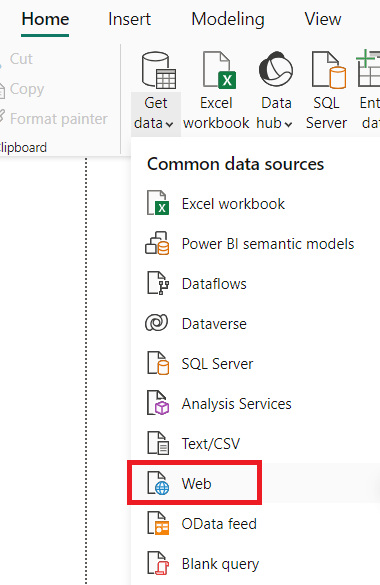
1. Open Power BI and click on “home -> get data -> web”:
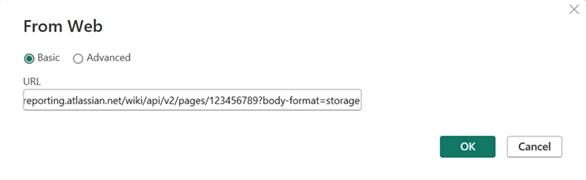
2. Put the URL then click “OK:
URL/wiki/api/v2/pages/youridpage?body-format=storage
- URL for API token with scopes:
https://api.atlassian.com/ex/jira/yourcloudid

- URL for API token without scopes:
https://yourjira

NOTE:
- To not repeat everything in double, for this article, I will use the second URL
- Change yourjira, yourcloudid and youridpage by yours. To get the cloudid, put this in a browser: https://yourjira/_edge/tenant_info
In the authentication window, select “basic” and I put my credentials:
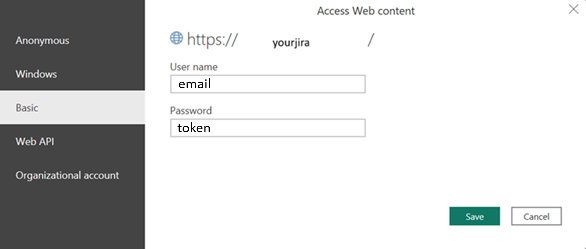
NOTE: this window will not appear anymore once I will be connected to Confluence but if it doesn’t appear for your first connection, go to the “edit credentials” section to edit it if needed
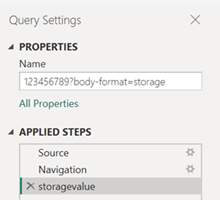
3. It will open the Power Query Editor, before to continue, I will change the name:
 |
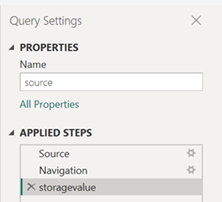 |
4. Click on “advanced editor”:
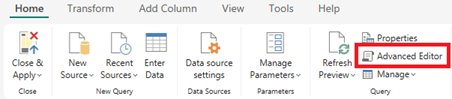
5. Remove everything below “source” to have only this:


6. Add this below “source”:
bsvalue = Source[body][storage][value]
in
bsvalue

If everything goes well, I should get a html code:

7. Copy the html code then open “notepad” to paste it and save it with the “html” extension with a new name:
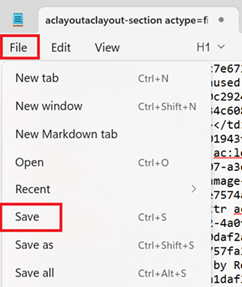 |
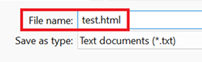 |
8. Back to Power Query Editor, click on “home -> new source -> text/CSV”:
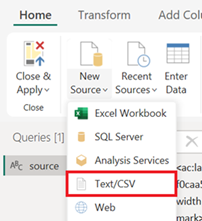
9. Click on the “right” field to select this option then on the “left” field, select the “notepad” file:


If everything goes well, I will get the “navigator” popup:
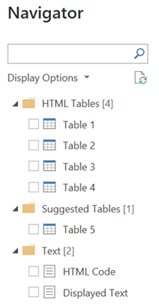
10. From here, based on what I will select, I will follow those steps:
- a. For table
After selecting “table 3” for instance, I will click on “advanced editor” then copy everything below the 2nd line (green section):

- b. For text
After selecting “displayed text”, I will click on “advanced editor” then copy everything below the 2nd line (green section):
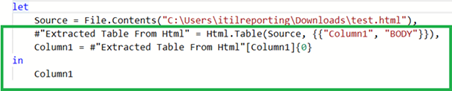
11. Select “source” then “advanced editor”:
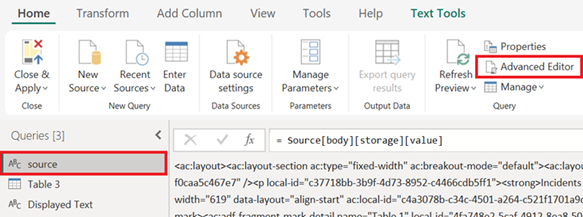
12. After [value], add a comma -> [value], and replace the green section by what I copied:

- a. For table
Additionally, change “source” by “bsvalue” (green lines)


- b. For text
Additionally, for the green lines:
- Change “source” by “bsvalue”
- Change “body” by “p”
- Remove {0}


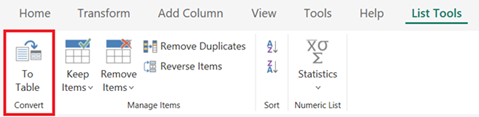
Click on “list tools -> to table”:
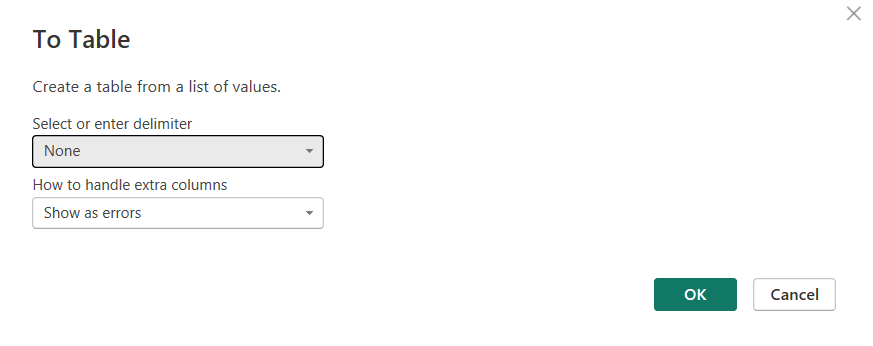
Click “OK”:
Result:

NOTE:
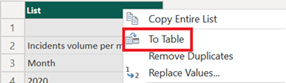
- Alternatively, right click on the header then select “to table”
- I put “p” because in the HTML code, the sentences are coded between <p> and </p> by following the logic of the Html.Table function combining with the correct CSS selector
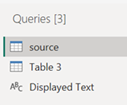
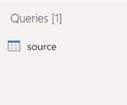
13. I will delete the queries with the “notepad” file (in my example, “table 3” and/or “displayed text”)
 |
 |
14. Once done, click on “home -> close & apply”
If I want to have both (table and text) and/or more tables , I will need to have 1 source for each because it is not possible to have all in 1 single source. For instance, to get “table 2”, “table 3” and “displayed text”, I will have 3 sources.
Power BI Desktop: edit credentials
To edit my credentials, I will go to “global permissions” in “data source settings” then right click on the first “atlassian.net” and click on “edit permissions”
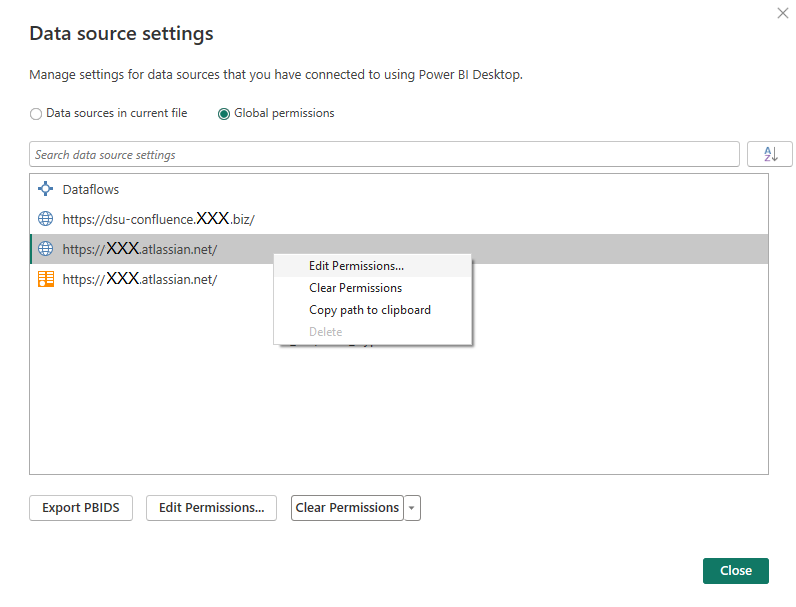
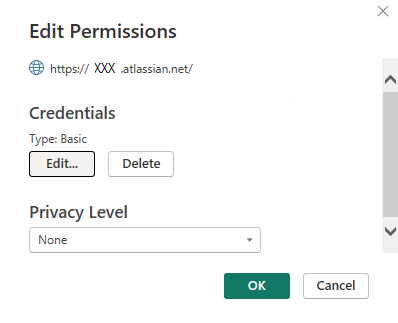
Click on “edit”
In the “user name”, I put my account and in the “password”, I put my API token
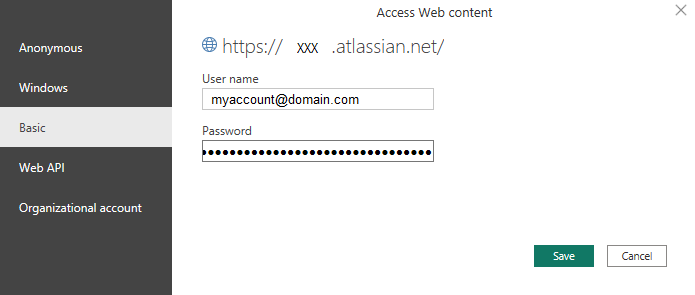
Once done, repeat the same things for the other “atlassian.net”.
Power BI Service: edit credentials
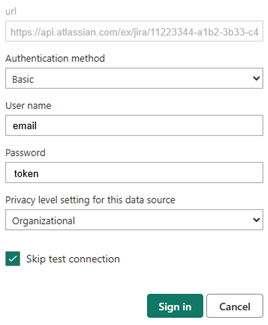
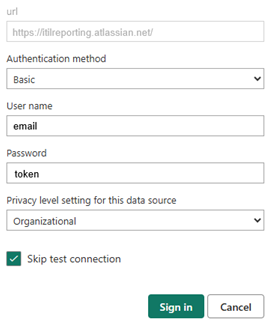
Once published in Power BI Service, in order to configure the automatic refresh, in “data source credentials”, click on this option:

Configure like in the picture according to your token (in the “user name”, I put my account and in the “password”, I put my API token) then click on “sign in”:
| For API token with scopes | For API token without scopes |
 |
 |
Interesting Topics
-

Be successfully certified ITIL 4 Managing Professional
Study, study and study, I couldn’t be successfully certified without studying it, if you are interested...
-
Be successfully certified ITIL 4 Strategic Leader
With my ITIL 4 Managing Professional certification (ITIL MP) in the pocket, it was time to go for the...
-

Hide visual and change background color based on selection
Some small tricks to customize the background colour of a text box...
-
Stacked and clustered column chart or double stacked column chart
In excel, I use a lot the combination of clustered and stacked chart...
-

Refresh Power BI
From the Power BI Service, I can set refresh but, for instance, there is no option to do it monthly or each time a change is made...
-
Power BI alerts to be sent by email from an excel file based on condition
I will explain how to send a list of emails from an excel file after creating alerts...
-

Count and check empty cells of filtered columns using a macro in an excel report
I use this macro to check if there are blank cells after I filtered...
-
Delete rows out of date using a macro in an excel report
In most of the reports, when I am doing the monthly one, I just need to keep all data that are in the month...
-
Find a specific value then insert a row and more things using a macro in an excel report
This VBA allows me to look for a specific value, it can be...
-
Execute a macro based on the day or time in an excel report
In some excel files, I am using a macro to tell it in which moment to do the report. For instance, if I am...
-
List unique values then combine in one single cell all data using a macro in an excel report
In one of my reports, I have to list from a column the unique values...
-

Copy/paste a range of values after finding the current date in an excel report
This script is to check and compare each cell of a specific column to...
-
Insert a row after finding a specific value in an excel report
This script allows to search a particular value, once find it, a new row will be inserted above or below...
-
Copy data between 2 sheets on top or bottom using an office script in an excel report
This online script allows me to copy the full data of a table to another...
-
Use a script to copy, cut, paste, replace and delete in an excel report (part 2)
This is the second part of my tutorial and it will be focused on...
-
Autofill from the last row using an office script in an excel report
This script will look for the last row then it will copy and paste the data to a number of rows below...
-

Calculate a weighted average for a SLA and a conversation time with a formula in an excel report
In one of my experiences, I had a tool that gave me the weighted average...
-
Search in different sheets then display the wanted data with a formula in an excel report
vlookup and hlookup are formulas that allow to search a data in another...
-
Find the good data by matching 3 different criterias with a formula in an excel report
It is a combination of “index” and “match” formulas, much better...
-
Sum and count sales with a formula in an excel report
Extracting data from salesforce or qlikview may not give the information I needed, it already happened...
Know how long a service is impacted with a formula in an excel report
It is important to know how long the service has been impacted by...